Confused by all the labels on prefab homes? You’re not alone. Prefab is an umbrella word; the real differences are how much is built in a factory and which building code applies.
This guide is part of our wider look at modular homes.
| Item | Key fact |
|---|---|
| Prefab | Generic term for a home partially or fully produced in a factory |
| Manufactured home | Built to the federal HUD Code, in force since 1976 |
| Modular home | Regulated by state and local building codes |
| Panelized home | Walls, floors and roofs made in a factory as sections |
| Modular factory share | 70 percent or more of the home may be completed in the factory |
Figures come from the National Association of Realtors and a HUD research report on factory-built housing. Rules and market details can change, so check the source before you rely on them.
What does “prefab” actually mean?
The National Association of Realtors describes prefab as a generic term, abbreviated from “prefabricated”, that often refers to a home partially or fully produced in a factory and later delivered for assembly onsite.
That makes it a family name, not a house type. A prefab can be a whole finished module, a set of wall panels or a pile of pre-cut parts.
The word is also not a quality grade. Two prefab homes can differ hugely in how they are built, regulated, financed and sited, which is why the sub-types matter more than the label.
The main types of prefab homes
Most sources sort prefab housing into a handful of categories. The boundaries blur in places, and different writers group them differently, so treat the list as a guide.
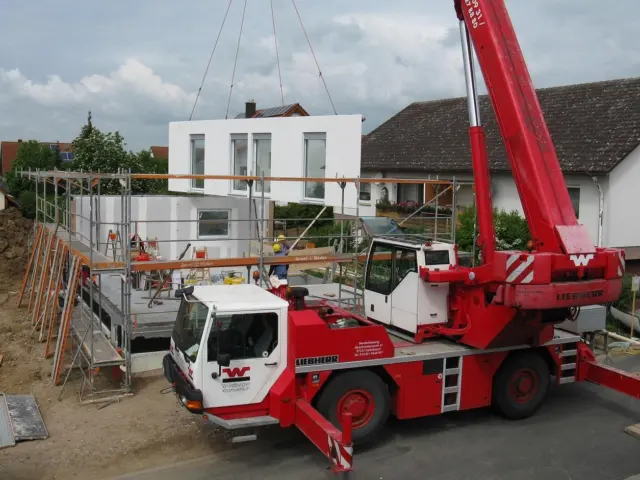
- Modular: full rooms or modules are built in a factory, delivered and joined on site.
- Panelized: walls, floors and roofs are made as sections and assembled on the job site.
- Pre-cut and kit homes: packages of parts, including log homes, that someone assembles on site.
- Manufactured: complete homes built to the federal HUD Code on a steel chassis.
The National Association of Realtors says that with modular construction, some 70 percent or more of the home may be completed in the factory. It lists panelized homes as prefabricated sections such as walls, floors and roofs created in a factory and delivered to the job site.
HUD’s report groups log homes, pre-cut package homes and various types of panelized construction together as another branch of factory-built housing.
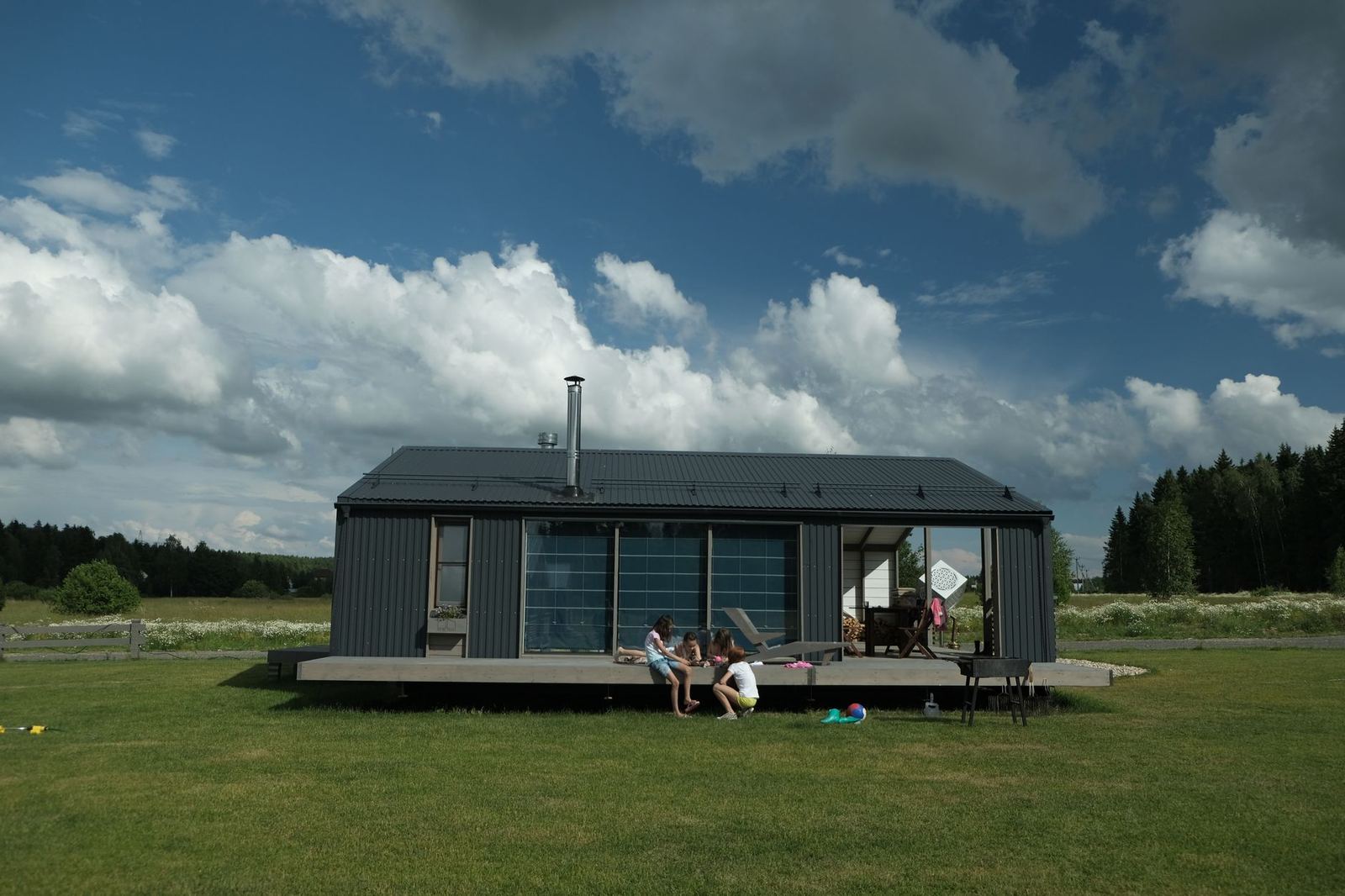
Modular vs manufactured: the code is the dividing line
This is the distinction that confuses people most. Both are built indoors, but they answer to different rulebooks.
According to HUD’s report, by 1976 mobile homes had come under regulation in the form of the pre-emptive federal “Manufactured Home Construction and Safety Standards”, or HUD Code, and the era of modern “manufactured homes” began. The same report states that the HUD Code pre-empts all state and local codes that might otherwise apply to design and construction of manufactured homes.
Modular homes are different. HUD notes that the design and construction of modular homes is regulated entirely by state and local building codes similar or identical to those that apply to site-built houses.
In practice that means a modular house is inspected much like a conventional one. If you want to know how the factory process works step by step, see our guide on how modular homes are built.
The steel chassis and what it changes
A visible technical difference is the frame. HUD explains that manufactured homes were designed to be capable of moving from site to site, so they are required by regulation to have a structural chassis to provide stability in transport.
The same report says that about three-fourths of new manufactured homes were placed on blocks that support the home beneath the integral steel chassis, and that the chassis serves to reduce floor spans and permits the use of less expensive floor framing. That description reflects the report’s own period, so check how current practice looks where you live.
Modular units do not rely on that arrangement. They are transported on carriers, then set onto a foundation prepared for them. HUD adds that modular homes are usually sold through small builders responsible for preparing the site and foundation as well as required finish work.
Where “mobile home” fits in
HUD’s report explains that for many years the most common type of factory-built housing was the “mobile home”, a narrow, lightweight descendant of the self-contained travel trailer that was designed to be towed from one location to another along public roads and hooked up for temporary use.
That is the origin of the old label. After the HUD Code arrived, the modern manufactured home took its place as the regulated product.
The report also notes that some surveys still use the generic term “mobile home” to include both units made before the HUD Code and newer manufactured housing subject to it. So you will still see the old word used loosely in statistics and everyday speech.
- Pre-HUD Code units are the historical mobile homes.
- HUD Code units are manufactured homes.
- Modular homes are a separate group, built to state and local codes.
Why build in a factory at all?
The main appeal is control. HUD’s report says factory production minimizes delays due to poor weather, exposure to theft and vandalism, and damage to building products and materials stored for use in construction.
The National Association of Realtors adds that prefab is known for faster build times, and that manufacturers are adding greater abilities for home buyers to customize these homes, despite sections of them being mass produced in a factory setting.
Faster is not the same as cheaper or simpler overall. You still need land, utilities, permits, a foundation and transport, and these vary by site and region. Always price the whole project, not only the factory-built part.
The same Realtors article says manufacturers see misunderstanding of what prefab is and is not as the cause of its sometimes bad rap. Knowing the vocabulary above is the quickest way to cut through that.
How to compare prefab options before you commit
Because the labels overlap, ask each seller the same plain questions rather than relying on the name of the product.
- Which code was the home designed and inspected to: the HUD Code or state and local building codes?
- How much is built in the factory, and what is left to the on-site crew?
- Who prepares the site and foundation, and is that in the quoted price?
- What will your local planning office allow on your plot?
- How will you pay for it, and will your lender accept this type?
Quality is a separate question from type. Our piece on are modular homes good quality covers what to look for.
This site is an independent educational guide. It is not affiliated with any company or agency named here, and it does not sell homes or offer advice on individual projects.
Frequently asked questions
Is every prefab home a mobile home?
Show answer
No. Prefab is a much wider family that includes modular, panelized, pre-cut and manufactured homes. “Mobile home” is the older term for towable factory-built housing.
Is a modular home the same as a manufactured home?
Show answer
No. Per HUD’s report, modular homes follow state and local building codes, while manufactured homes follow the federal HUD Code.
What is a panelized home?
Show answer
It is a home whose walls, floors and roofs are made as sections in a factory, then delivered and assembled on the job site, as the National Association of Realtors describes it.
Does prefab mean the home is finished in the factory?
Show answer
Not necessarily. The share varies by type. For modular homes, the National Association of Realtors says some 70 percent or more may be completed there, and the rest is done on site.